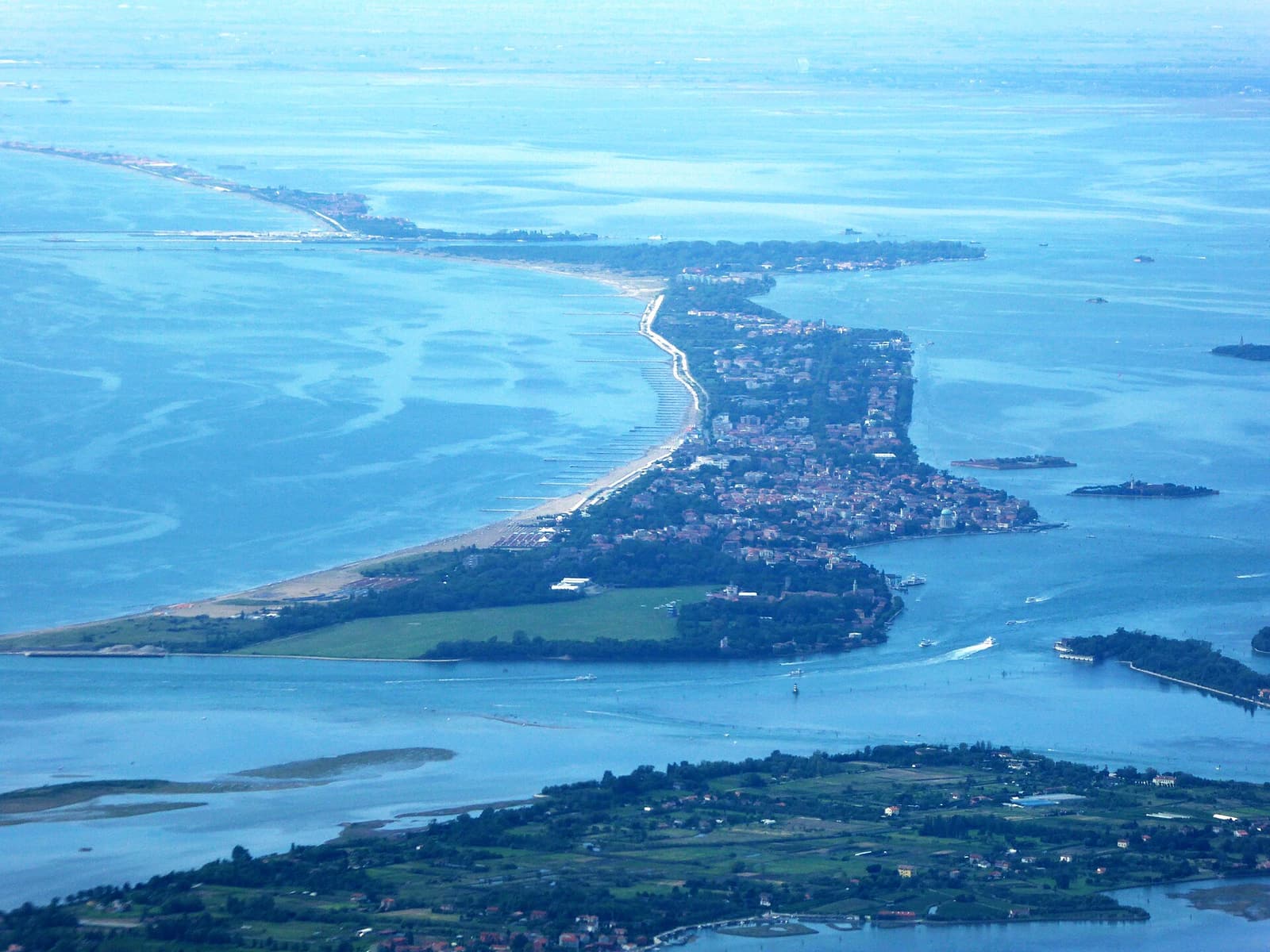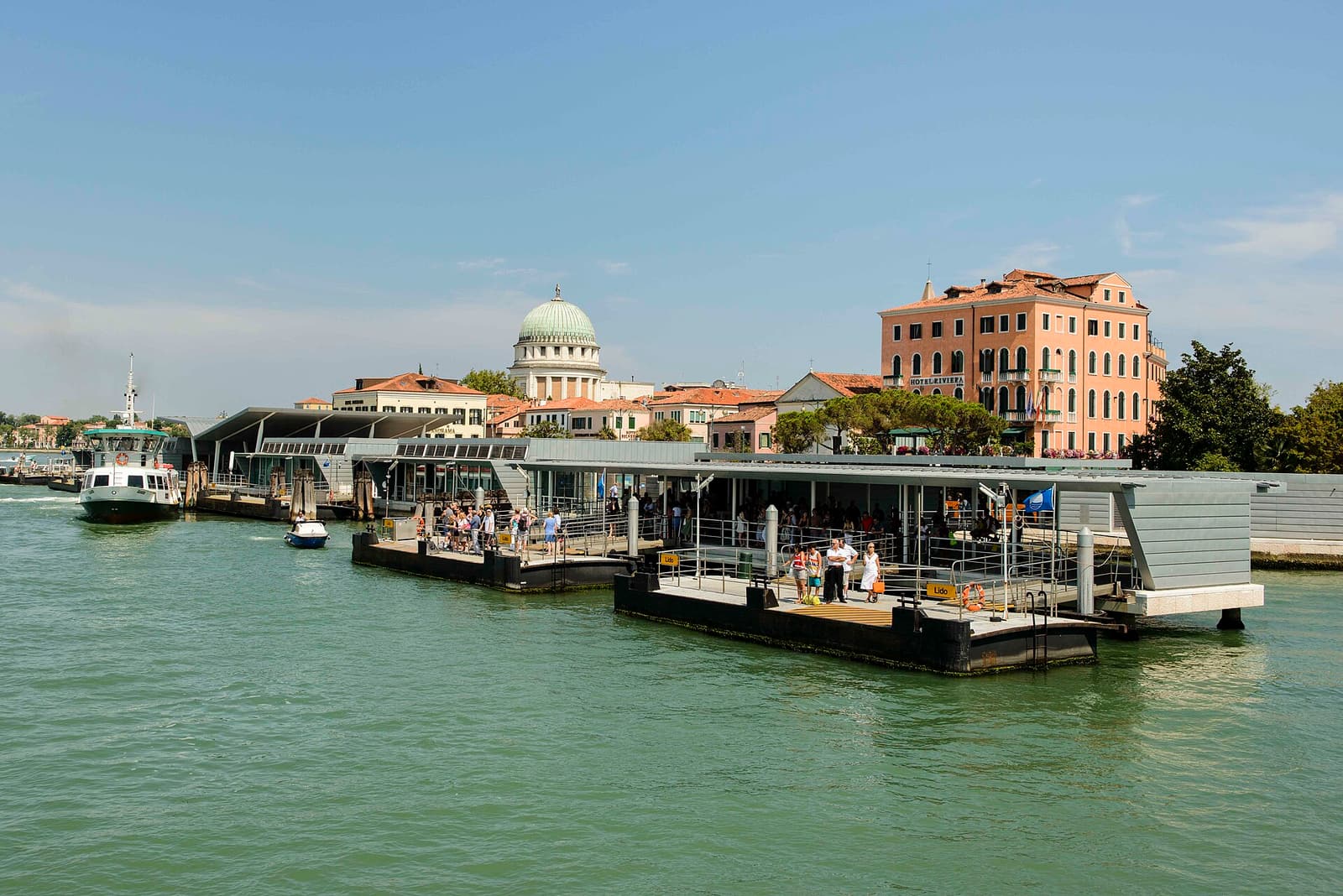
The Lido is an island, so you arrive by water — but it is one of the best-connected places in the lagoon. Almost everything lands at Santa Maria Elisabetta (“Lido S.M.E.”), the main vaporetto stop at the top of the Gran Viale. The exceptions are the car ferry, which lands at San Nicolò in the north, and line 11, which links the south of the island with Pellestrina and Chioggia.
Timetables and fares change by season, so treat the times below as a guide and check the live ACTV timetable before you travel.
The main routes, compared
| From | How | Time (approx.) | Good to know |
|---|---|---|---|
| San Marco / San Zaccaria | ACTV vaporetto | 15–20 min | The quickest crossing; several lines |
| Train station / Piazzale Roma | Vaporetto (lines 1, 5.1/5.2, 6 when running) | 35–75 min | Line 1 is slow but runs the Grand Canal |
| Marco Polo Airport | Alilaguna boat (Blue line) | About 1 h+ | Direct by water; book ahead |
| Marco Polo Airport | Bus to Piazzale Roma + vaporetto | About 1 h 15 | Cheapest; more changes |
| Tronchetto (by car) | Car ferry, line 17 | About 35 min | Lands at San Nicolò; bring your car |
| Chioggia | Boat + bus, line 11 via Pellestrina | About 1 h 30 | The scenic “back door” |
1. From Venice’s historic centre
From San Zaccaria, next to San Marco, vaporetti cross to the Lido in around a quarter of an hour and run from early morning until late at night, with a reduced night service. This is the crossing you will make most often if you stay on the Lido.
2. From the train station or Piazzale Roma
If you arrive by train at Venezia Santa Lucia or by bus/car at Piazzale Roma, you have two choices: line 1, which drifts down the entire Grand Canal and reaches the Lido in a little over an hour — the most beautiful commute in the world — or the circular lines 5.1 and 5.2, which go round the outside of the city and are usually faster. A faster direct line (line 6) runs on some timetables. Check which is running on your day.
3. From Marco Polo Airport
The Alilaguna airport boats leave from the dock a short walk from the terminal. The Blue line calls at the Lido on its way to San Marco — the most scenic arrival, with no changes and room for luggage. Alternatively take the airport bus to Piazzale Roma and a vaporetto from there, or treat yourself to a water taxi (fast and door-to-door, but expensive — agree the fare first).
Arriving at Treviso airport? Take the bus to Piazzale Roma, then a vaporetto.
4. By car: the car ferry
Unlike Venice, the Lido has roads, and you can bring a car. Line 17, the ACTV car ferry, runs from Tronchetto to San Nicolò at the north end of the island in about 35 minutes. Fares depend on vehicle length. Most visitors are better off leaving the car in a garage at Tronchetto or Piazzale Roma and using the vaporetto — you do not need a car on the Lido.
5. From Chioggia and Pellestrina
Line 11 is a wonderful journey in itself: a boat from Chioggia to the southern tip of Pellestrina, a bus down the island, a ferry across to the Alberoni and a bus up the Lido to Santa Maria Elisabetta. It is also the way to visit Pellestrina from the Lido.
6. From Punta Sabbioni and the Cavallino coast
Staying at the campsites of Cavallino-Treporti or in Jesolo? Boats from Punta Sabbioni cross to the Lido in a few minutes, and line 14 continues towards Burano.
The Venice access fee: does it affect the Lido?
Venice charges day-trippers an access fee (contributo di accesso) to enter the historic centre on selected days. In 2026 it applied on 60 days between 3 April and 26 July, mainly Fridays to Sundays and holiday periods, between 08:30 and 16:00. It cost €5 when paid at least four days in advance and €10 after that; under-14s did not pay. Dates and rules for 2027 had not been announced at the time of writing.
- The Lido itself is outside the fee area, as are Pellestrina, Murano, Burano, Torcello and the other minor islands. A beach day on the Lido never requires the fee.
- Transit does not count: passing through Piazzale Roma, Tronchetto or the station to catch a boat to the Lido is exempt.
- Staying on the Lido? Guests in accommodation within the Municipality of Venice — the Lido included — pay the hotel tourist tax instead and are exempt from the access fee, but should request an exemption QR code on the official portal for days they visit the historic centre.
- Day-tripping from the mainland and stopping in San Marco during fee hours on a fee day? Then you pay. Book at least four days ahead for the lower rate.
Always check the official Venice access fee website (cda.ve.it) for the current calendar before you travel — it changes each year.
Getting around the Lido
- Bike: the best way. The island is flat, with cycle lanes along much of the lagoon side. Rental shops are near Santa Maria Elisabetta.
- Bus: ACTV buses (covered by the vaporetto pass) run from Santa Maria Elisabetta to San Nicolò, the Lungomare, Malamocco and the Alberoni.
- On foot: the Gran Viale, the beach and the Lungomare hotels are all within about 20 minutes’ walk of the vaporetto.
Combine your trip: Venice and Lake Como
Venice and Lake Como pair naturally on a northern Italy rail trip: direct high-speed trains link Venezia Santa Lucia with Milano Centrale in roughly two and a half hours, and from Milan regional trains reach Como and Varenna in about an hour or less. Our Lake Como boat tours and ferry guide covers the lake’s villages, ferries and cruises.